January 15, 2025 · 8 min read
Mandibular Advancement Devices vs CPAP in Severe Sleep Apnea: Rethinking the Standard of Care
OSA management is evolving. If CPAP is the gold standard, MADs may be the platinum alternative — durable, patient-friendly, and heart-protective.
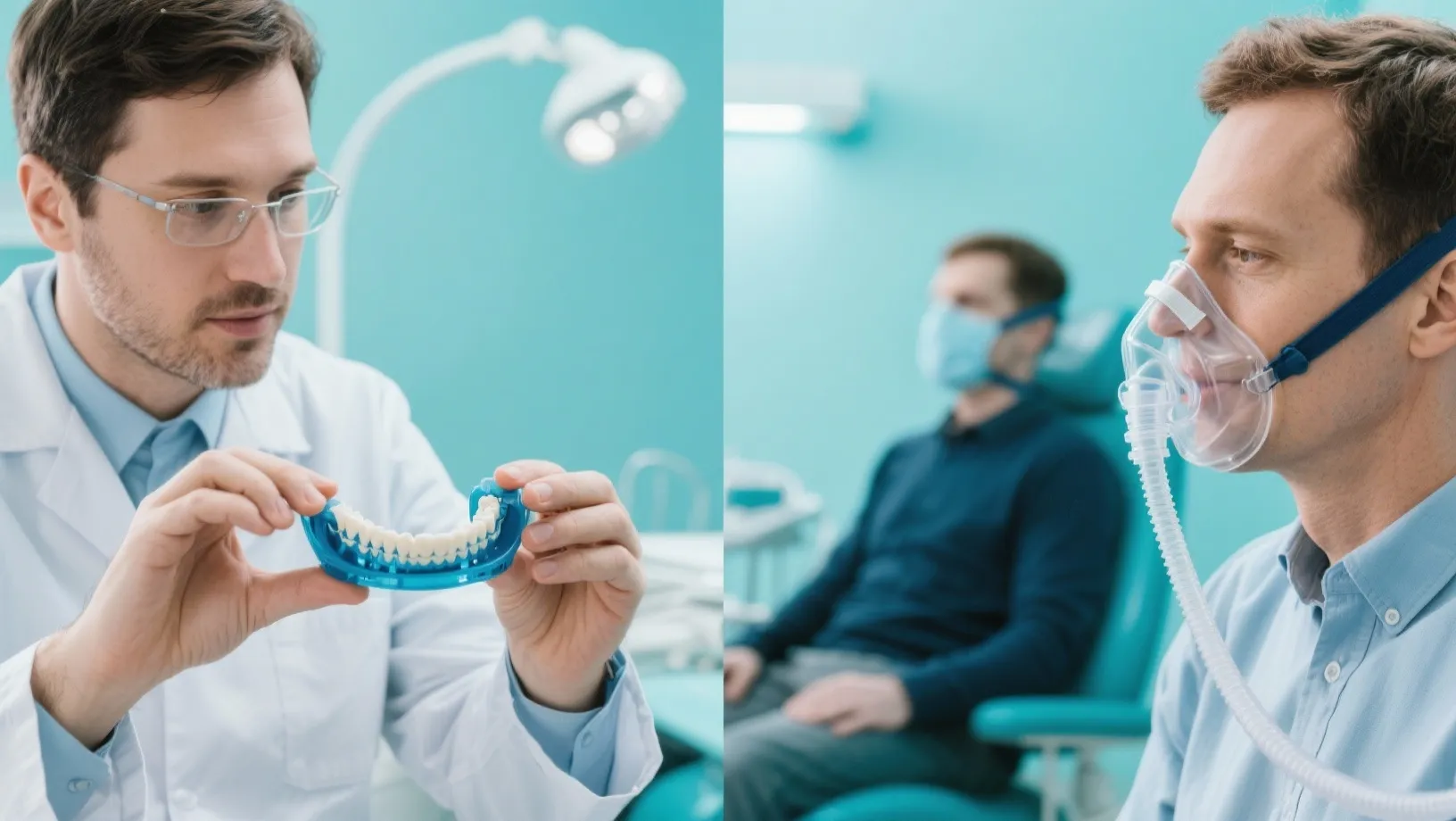
CPAP is the standard of care in severe obstructive sleep apnea — and adherence to CPAP is the unsolved problem at the centre of that standard. Reported long-term adherence rates sit between forty and sixty per cent, depending on how generously one defines adherence. The most effective therapy in the world is ineffective in the patients who cannot tolerate it.
Mandibular advancement devices are routinely positioned as the second-line option for patients who fail CPAP. The clinical question is whether that framing is still correct, particularly for the slice of severe-OSA patients in whom modern, titratable, custom-fabricated MADs achieve clinically meaningful reductions in AHI alongside high real-world adherence.
The cardiovascular signal is what makes this question consequential. Untreated severe OSA carries a measurable risk of stroke and major adverse cardiac events. A therapy that is fifty per cent as efficacious on a polysomnogram but used eighty per cent of the time can deliver more cumulative cardiovascular protection than a therapy that is ninety per cent as efficacious but used thirty per cent of the time.
The case for a re-evaluation is not that MAD replaces CPAP. It is that, in selected severe-OSA patients with a known intolerance to positive airway pressure, a well-titrated oral appliance is more than a consolation prize.
A note on this piece
This piece is also published, in its longer clinical form, on the Arch Dental of Woodbury journal.